
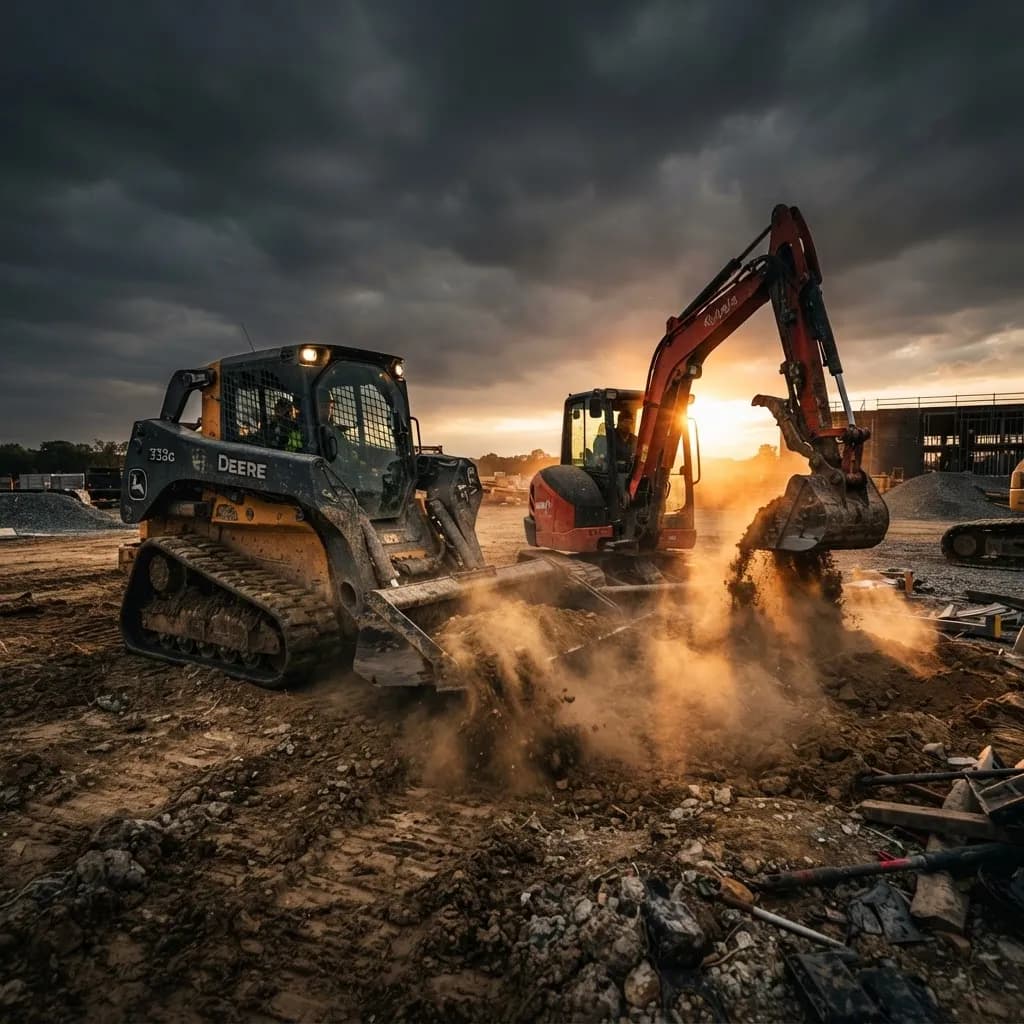
Land clearing &
groundwork in
Western Mass.
Stump grinding, excavation, grading, driveways and drainage — skid steer and mini excavator work across Hampshire, Hampden and Franklin counties.
From raw land to build-ready
Land clearing, stump grinding, excavation, grading, driveways and drainage across Hampshire, Hampden and Franklin counties. Saga Heavy Machine Co. handles the groundwork so your project starts on solid footing.
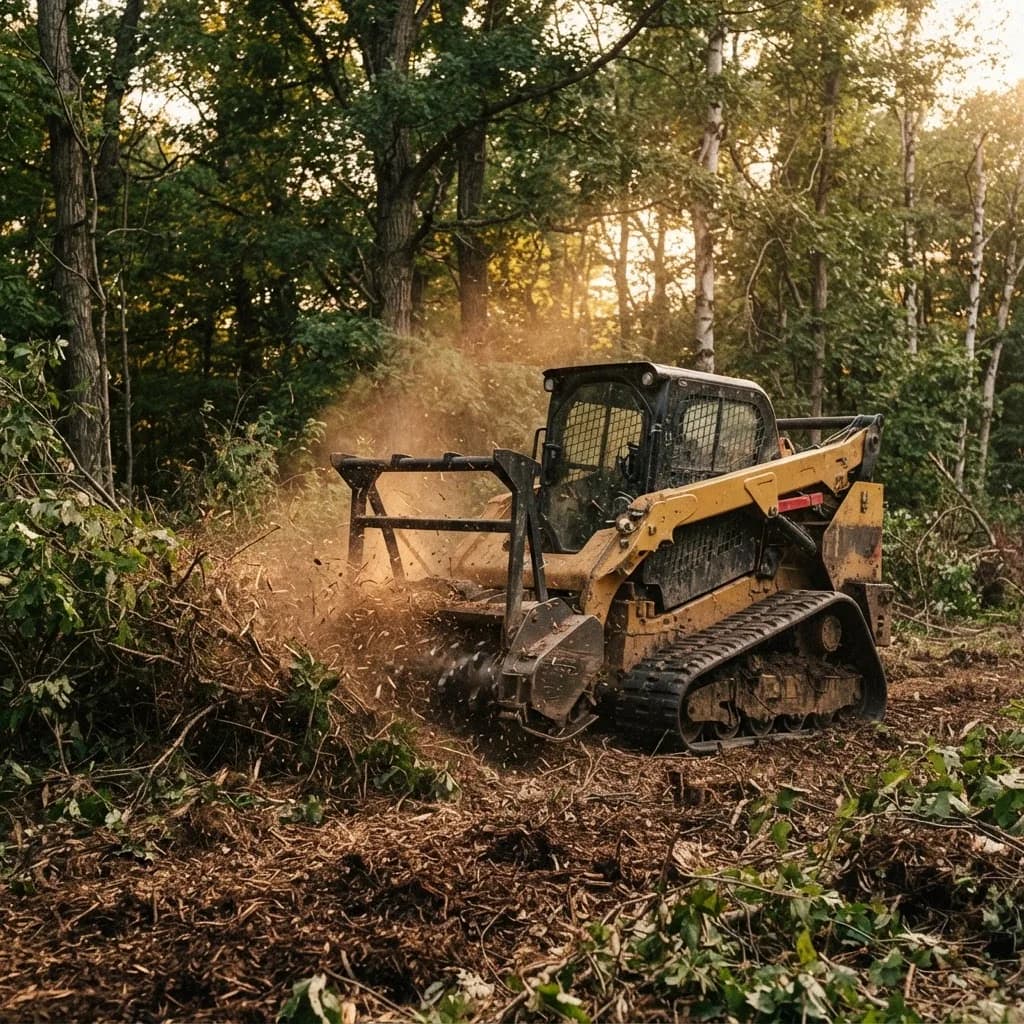
Land Clearing
Brush removal, tree takedown, and forestry mulching to open up overgrown lots.
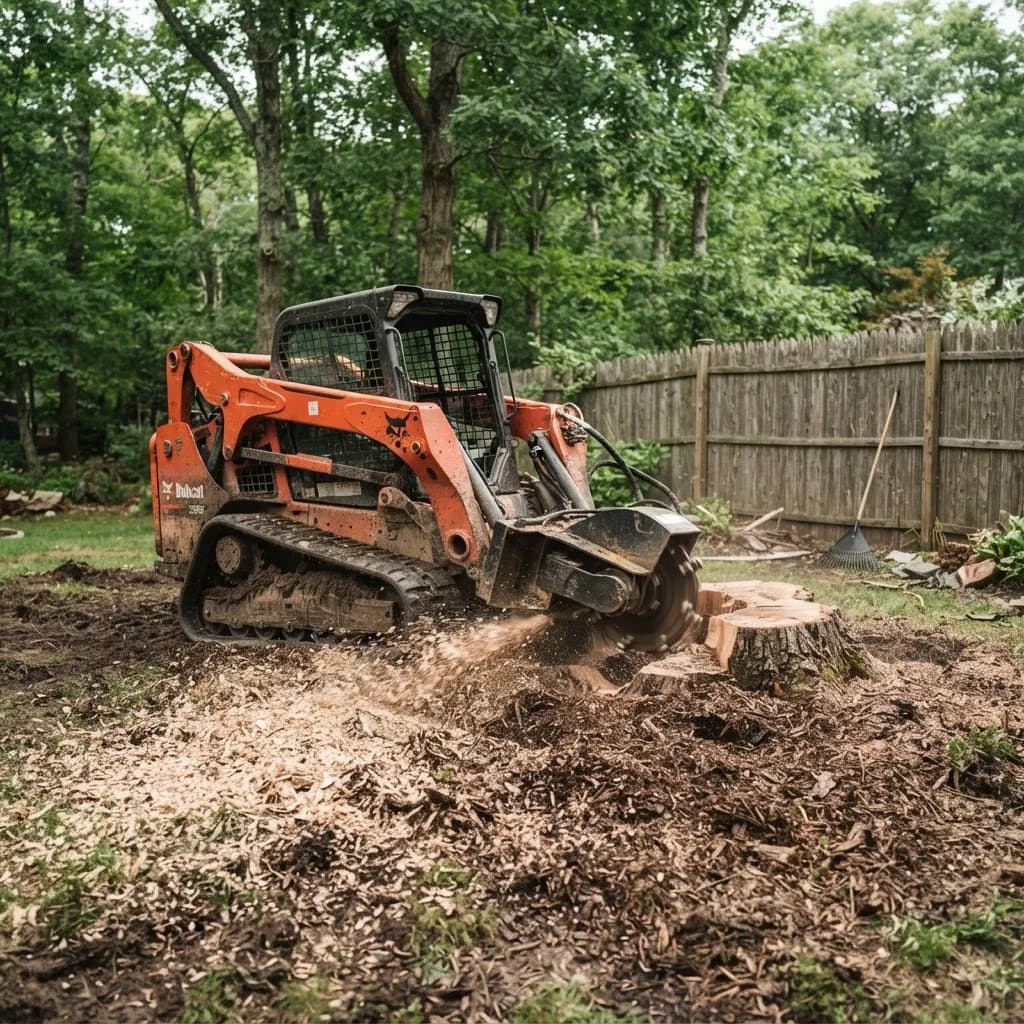
Stump Grinding
Stumps ground below grade so you can mow, build, or plant over them.
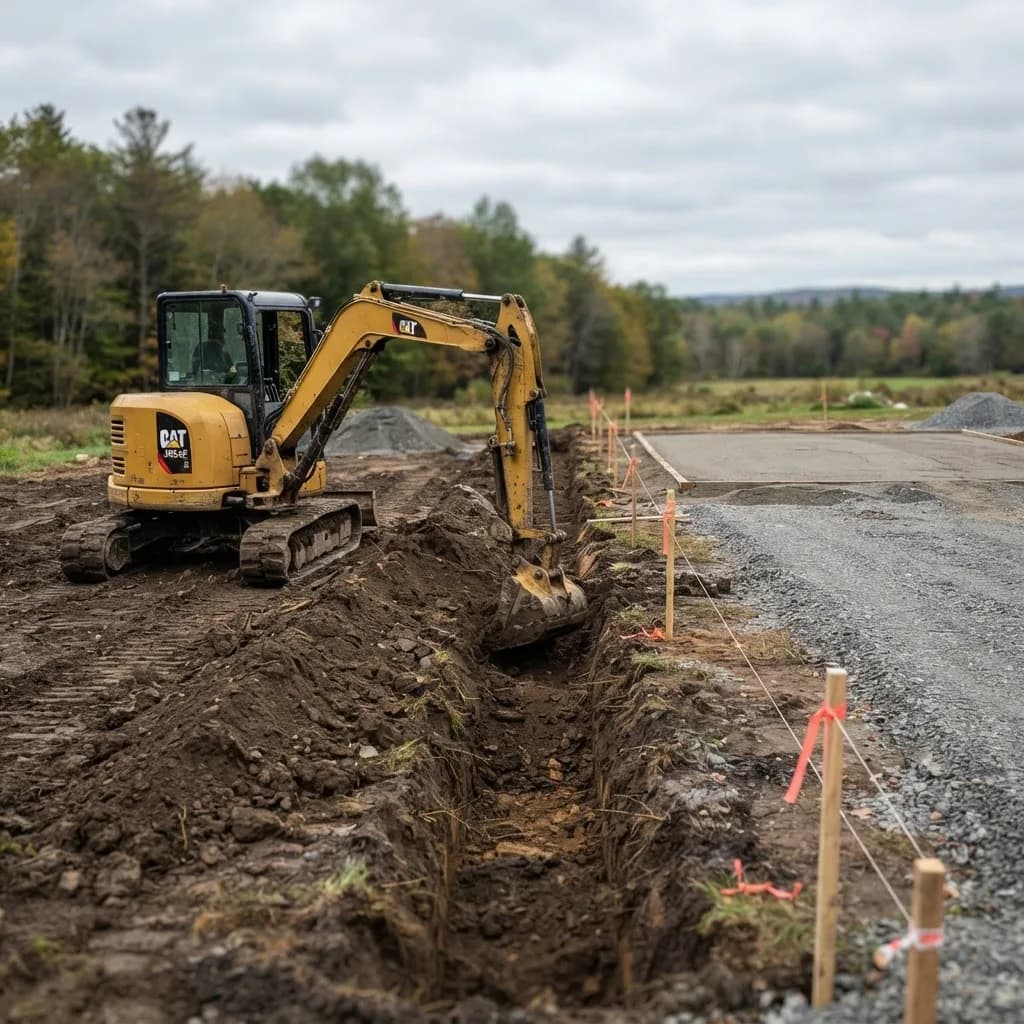
Excavation & Grading
Footings, trenches, pads, and precision grading — dug and shaped to spec, drainage-ready.
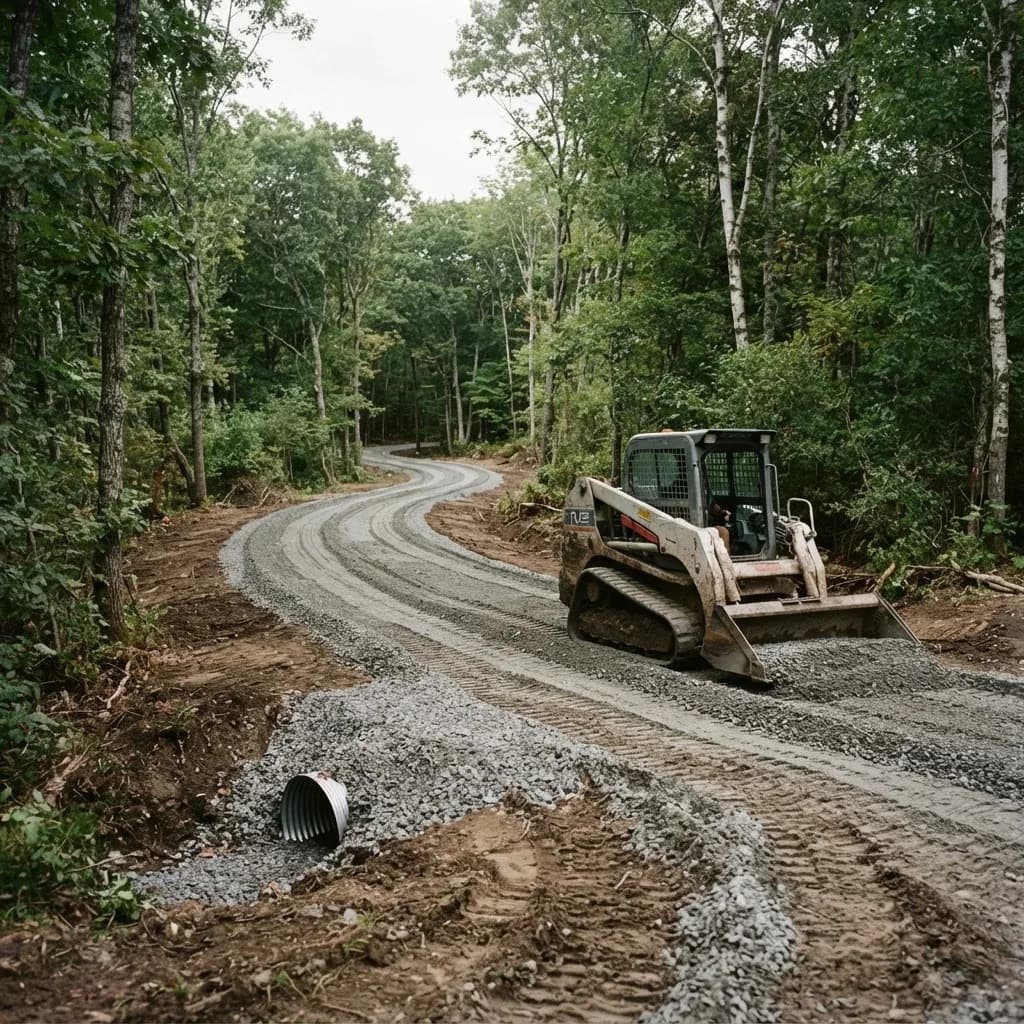
Driveways & Access
New gravel drives, culverts, and access roads cut and graded for durability.
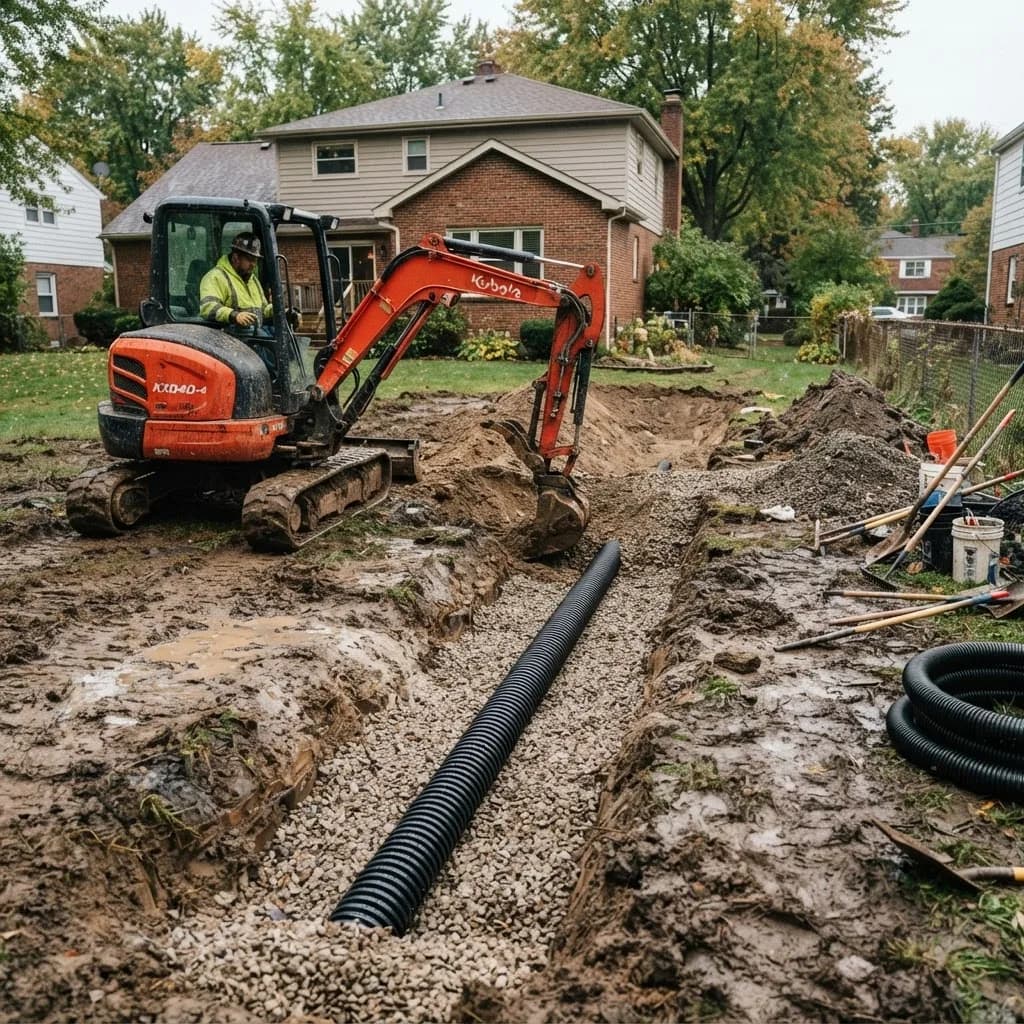
Drainage & Water Management
Swales, ditches, and trenching that move water away from your structures for good.
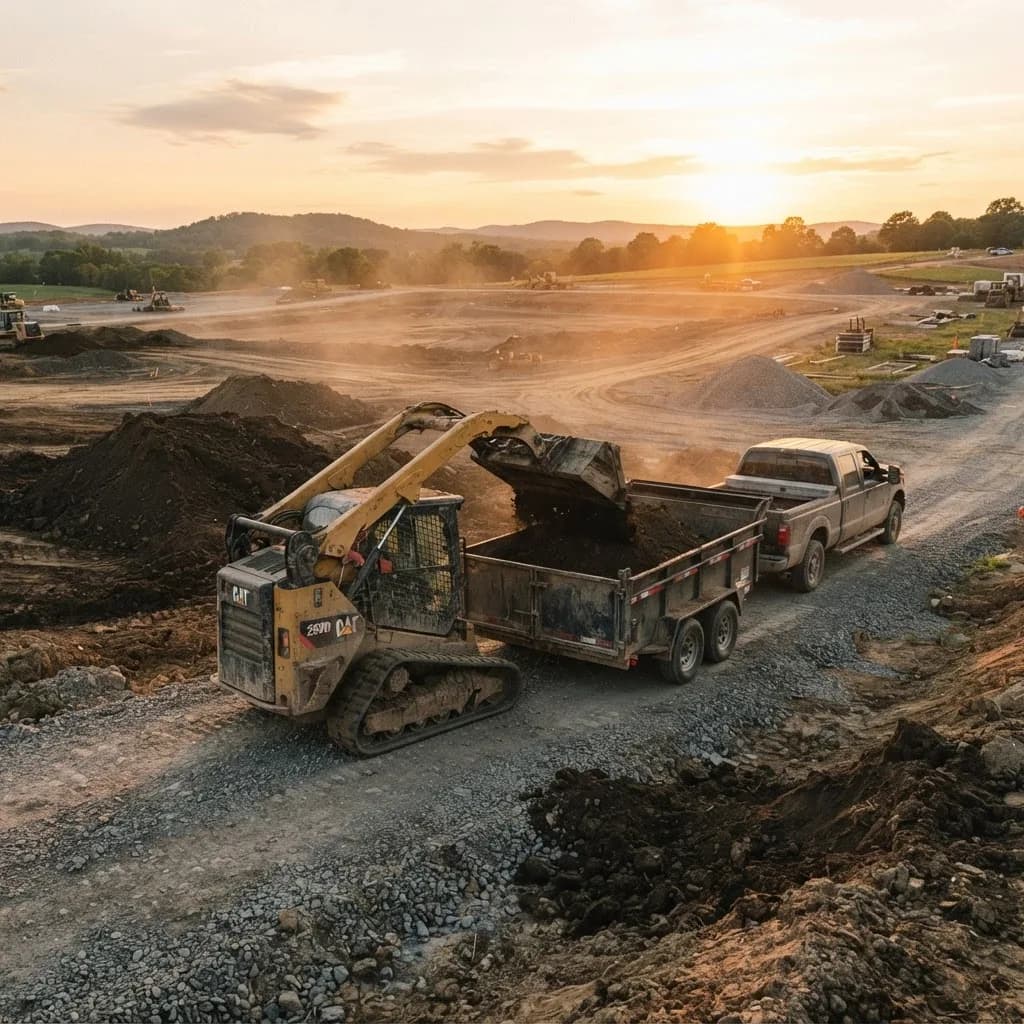
Site Prep & Hauling
Full site preparation, backfill, and material hauling to keep your project moving.
How we work
Small outfit, compact equipment, and a straight answer on what your site needs.
Local to the Valley
Based in Northampton and working within about 40 miles. We know the ledge, the clay, the hill town grades, and which back roads post weight limits in mud season.
Written estimates
We walk the property, explain what we would do and why, and put the number in writing before any machine moves. No surprises added after the fact.
Insured, certificate on request
Liability coverage in place, and we will send a certificate of insurance to you, your GC, or your town before work starts. Always ask any contractor for one.
You talk to the operator
The person who quotes your job is the person running the machine on it. Questions mid-project get answered by someone who is actually on site.
Area Covered
Serving Western Massachusetts
Based in Northampton and working within about 40 miles — Hampshire, Hampden and Franklin counties, across the Pioneer Valley and into the hilltowns. We travel further for the right project.
Western Massachusetts is our core service area — we travel across the rest of New England for the right project.
Towns we work in
Not sure if you're in range? Reach out — we'll let you know.
Common questions
Straight answers on cost, permitting, seasonality, and how this work actually goes in Western Massachusetts.
How much does land clearing cost in Western Mass?
Clearing is priced by the acre and by what is actually on the ground. A field of light brush is a fraction of the cost of mature hardwood with large stumps, and access matters too — a lot we can drive equipment straight onto is cheaper than one that needs a path cut first. Slope, wet ground, and whether you want the debris chipped on site, hauled off, or piled for firewood all move the number. We walk the property, tell you what we would do, and give you a written estimate before anything starts.
What is the difference between stump grinding and stump removal?
Grinding chews the stump down into chips, typically 6 to 12 inches below grade, and leaves the root ball in the ground to break down naturally. It is faster, cheaper, and far less disruptive to the surrounding lawn. Full removal pulls the entire root mass out with an excavator, which leaves a large hole to backfill but is the right call if you are pouring a foundation, setting a post, or planting a new tree in the same spot. For most homeowners who just want to mow over it, grinding is the answer.
Do you grind stumps close to a house, fence, or septic system?
Yes, and that is exactly where the machine choice matters. A compact grinder gets into tight side yards and works close to foundations, fence lines, and hardscape. Before we start we ask you to have underground utilities marked through Dig Safe (call 811), and we need to know where any septic tank, leach field, well line, or irrigation runs, because those are the things a grinder can damage. Tell us about them up front and we plan the approach around them.
What is forestry mulching and when is it better than clearing with a bulldozer?
A mulching head grinds standing brush and small trees into a layer of chips right where they stood, so there is nothing to haul away and no burn pile. Because it leaves the root structure and a chip mat behind, it holds soil in place — a real advantage on the slopes and erosion-prone ground common in the hill towns. It is ideal for reclaiming overgrown fields, opening view corridors, clearing trails, and maintaining property lines. If you need bare mineral soil for a building pad or driveway, conventional clearing and grading is the better tool.
When is the best time of year for this work in the Pioneer Valley?
Late spring through fall is prime season for most clearing, grading, and driveway work. Winter can actually be excellent for forestry mulching and clearing, because frozen ground carries equipment with far less rutting and the leaves are down so you can see what you are working with. Mud season — roughly March into April — is the hardest window: saturated ground rutts badly, and many Massachusetts towns post seasonal weight limits on back roads that restrict when we can move heavy equipment. If your job is flexible, scheduling around mud season gets you a better result.
Do I need a permit, and what about wetlands?
It depends on the town and the scope. Routine work like grinding a stump or regrading an existing driveway usually does not require anything. But if you are clearing near a wetland, stream, pond, or vernal pool, Massachusetts' Wetlands Protection Act puts a 100-foot buffer zone under your local Conservation Commission, and work in that area needs filing and approval before it begins. Larger clearing jobs can also trigger local bylaws or, if the land is enrolled in Chapter 61 forestry classification, a forest cutting plan. We tell you what we see when we walk the site and will not start work that should have gone to Con Comm first.
Do you haul away debris, brush, and stumps?
Yes — hauling can be folded into the scope, and we will price it as a line item so you can see what it costs versus keeping the material. Plenty of clients have us chip brush and spread it on site as trail or garden mulch, grind stumps and leave the chips in the hole, or stack any usable hardwood for firewood. That often saves real money over trucking it off. Just tell us which you want when we quote.
Are you insured, and do you provide a certificate?
Yes. We carry liability insurance and can send a certificate of insurance directly to you, your general contractor, or your town before work begins — just ask. Never let anyone run heavy equipment on your property without seeing one.
How do you price work — hourly or by the project?
Most jobs are quoted as a fixed project price so you know the number before we start. Open-ended work where the scope genuinely cannot be pinned down in advance is sometimes better handled on a day rate, and we will say so if that is the honest way to bid it. Either way you get the estimate in writing first, and we talk to you before doing anything that would change it.
Is there a minimum job size?
No. A single stump is worth a call. Because we run compact equipment, small residential jobs that are not economical for a big outfit are exactly the work we are set up for. If a job is not a good fit, we will tell you and point you toward someone better suited rather than waste your time.
Let's break ground
Tell us about your project and we'll get back to you with a fast, honest estimate. No job too small.