- What is the difference between land clearing and forestry mulching?
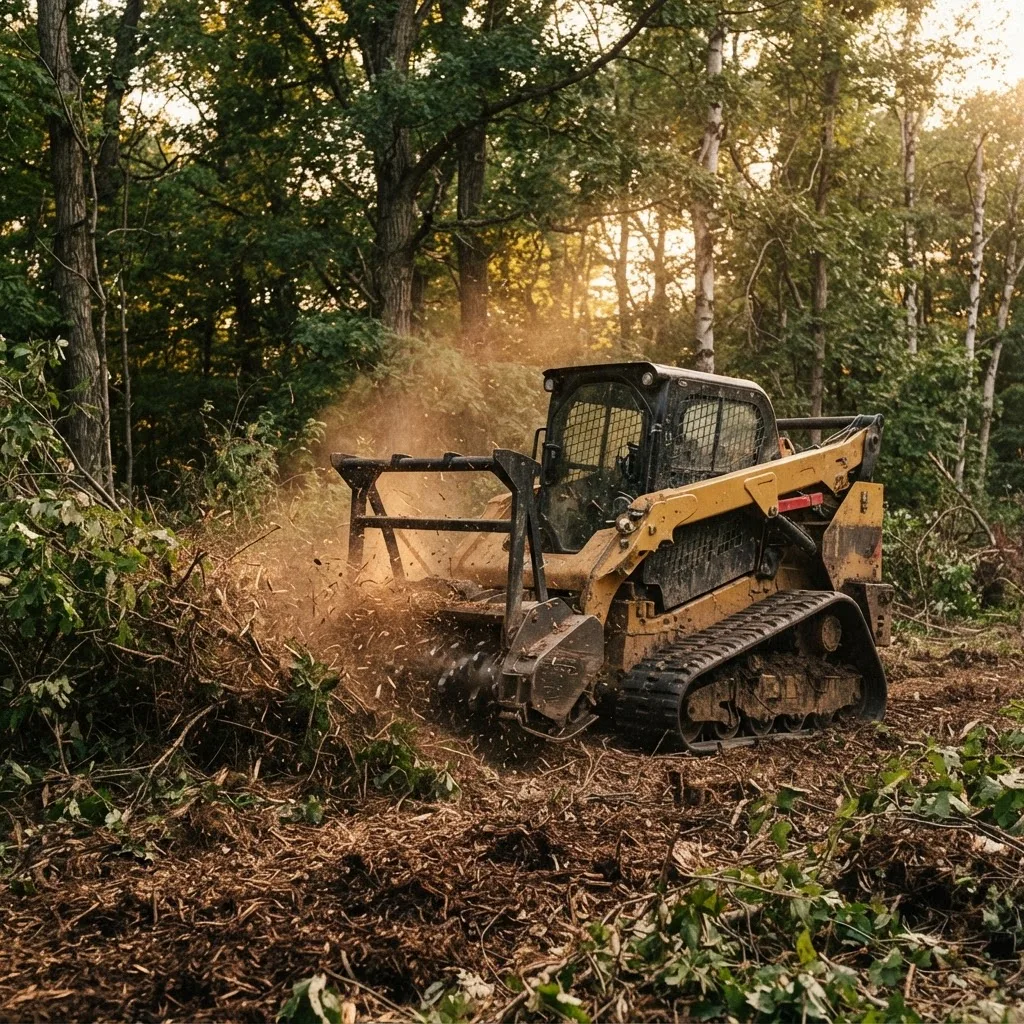
- Land clearing is the broad term for removing vegetation from a site. Forestry mulching is one method of doing it — a machine grinds standing brush and small trees in place and leaves the material as mulch, with nothing hauled away. Mulching is typically faster and cheaper and helps with erosion control, but it leaves a mulch layer rather than bare soil, so it is not the right choice immediately before a foundation or septic install.
- Do I need a permit to clear land in Massachusetts?
- It depends on where and how much. Work within 100 feet of a wetland resource area is regulated under the Massachusetts Wetlands Protection Act and generally needs a filing with your town's Conservation Commission first. Some towns also have local tree or scenic road bylaws affecting removals near the road. Clearing a modest area of upland well away from wetlands often needs nothing. We will tell you when a job looks like it needs a filing, but securing the permit is the property owner's responsibility.
- Do stumps get removed as part of clearing?
- Not automatically — stump work is priced separately because not everyone needs it. If you are going to mow, build, or landscape over the area, you will want the stumps ground below grade. If you are clearing back acreage or a trail, leaving them is often fine. Many customers bundle clearing with stump grinding on the same visit, which saves a second mobilization.
- How much land can be cleared in a day?
- It varies enormously with density and stem size. Light brush and saplings on flat, open ground go quickly. Mature trees, heavy slope, ledge, or wet ground slow things down substantially, and haul-off adds trucking time on top. We would rather walk the property and give you a real number than quote an average that does not fit your lot.