- How deep do footings need to be in Massachusetts?
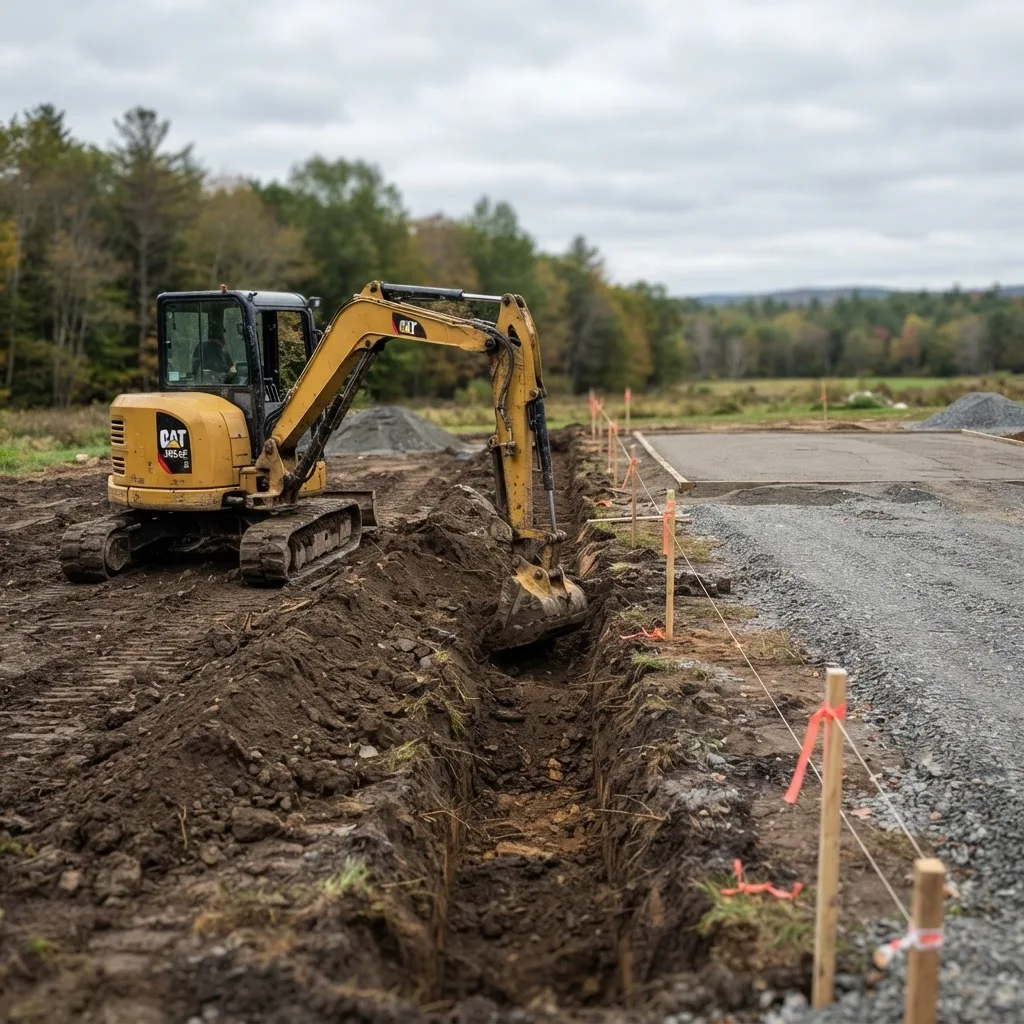
- Below the frost line, which in this part of Massachusetts is commonly around four feet, though your local building department sets the requirement for your town. Bearing above frost depth risks heave and structural movement. We confirm the required depth with your building department before digging rather than assuming.
- What happens if you hit ledge?
- Ledge changes the plan, and honestly it changes the price. Along the Holyoke and Mount Tom ranges and up in the hilltowns, bedrock close to grade is common. Options include shifting the location, redesigning to a shallower depth, or bringing in equipment for rock removal. This is exactly why we want to look at a site before quoting a deep dig, and why we would rather flag the risk than surprise you with a change order.
- Do you call Dig Safe?
- Yes — notification before excavation is legally required in Massachusetts and we do not skip it. Dig Safe marks public utilities. It does not cover private lines like septic components, irrigation, invisible dog fence, or landscape lighting, so let us know about anything like that on your property. Those are the lines that actually get hit.
- Can grading fix my wet basement?
- Frequently, yes, and it is usually the first thing to try. A large share of water-in-basement complaints come from ground that slopes toward the house, downspouts discharging at the foundation, or a low spot holding water against the wall. Establishing positive slope away from the foundation and routing water to a real outlet solves many of these. If water is entering under hydrostatic pressure from a high water table, exterior grading alone may not be enough, and we will say so rather than sell you work that will not fix it.