- Why is water pooling in my yard?
- Usually one of four things: runoff arriving from uphill or from roof downspouts, ground that pitches the wrong way, a high seasonal water table, or a compacted layer perching water near the surface. They look similar and need different fixes, so identifying which one you have is the important first step. Seeing the yard during heavy rain is far more useful than seeing it dry.
- What is the difference between a French drain and a swale?
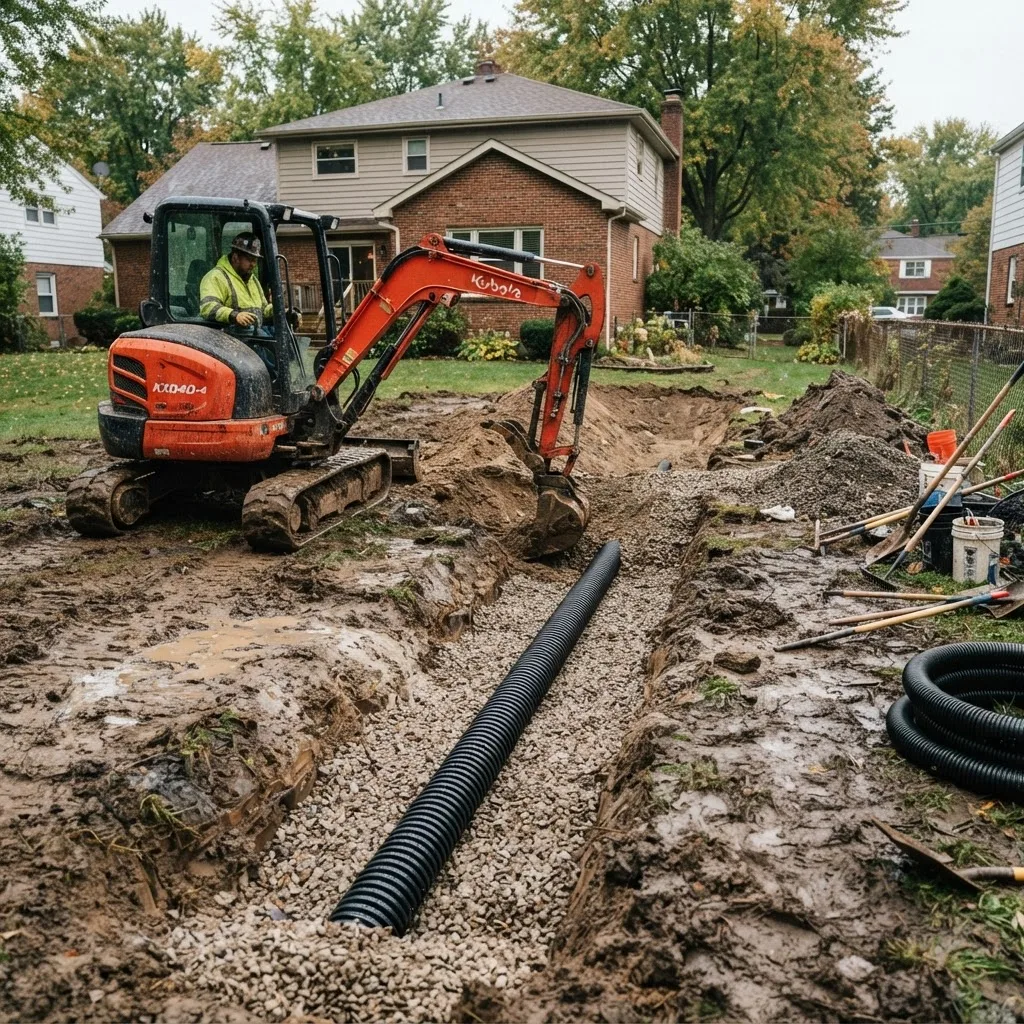
- A swale is a shallow vegetated surface channel that moves runoff across the property — cheap, mowable, and good for large surface volumes. A French drain is a buried gravel trench with perforated pipe that collects subsurface water and pipes it to an outlet. Surface water problems often call for a swale; saturated ground and water reaching a foundation usually call for a drain. Both need continuous fall and a legitimate outlet.
- Can I drain water onto my neighbor's property?
- No — discharging concentrated water onto adjoining land is both a legal exposure in Massachusetts and a reliable way to create a dispute. Collected water needs a legitimate destination: daylight at a lower elevation on your own property, a drainage easement, an adequately sized dry well, or a municipal connection where the town allows it. On flat lots, finding that outlet is often the hardest part of the design.
- Will a French drain fix my wet basement?
- Sometimes, but only if it matches the cause. If water is arriving as surface runoff or from grade sloping toward the house, exterior grading and a curtain drain intercepting flow uphill of the foundation often solve it. If groundwater is rising under hydrostatic pressure, exterior work may not be sufficient and interior drainage with a sump may be needed. We would rather diagnose it accurately than install a system that does not address what is actually happening.