- How thick should a gravel driveway be?
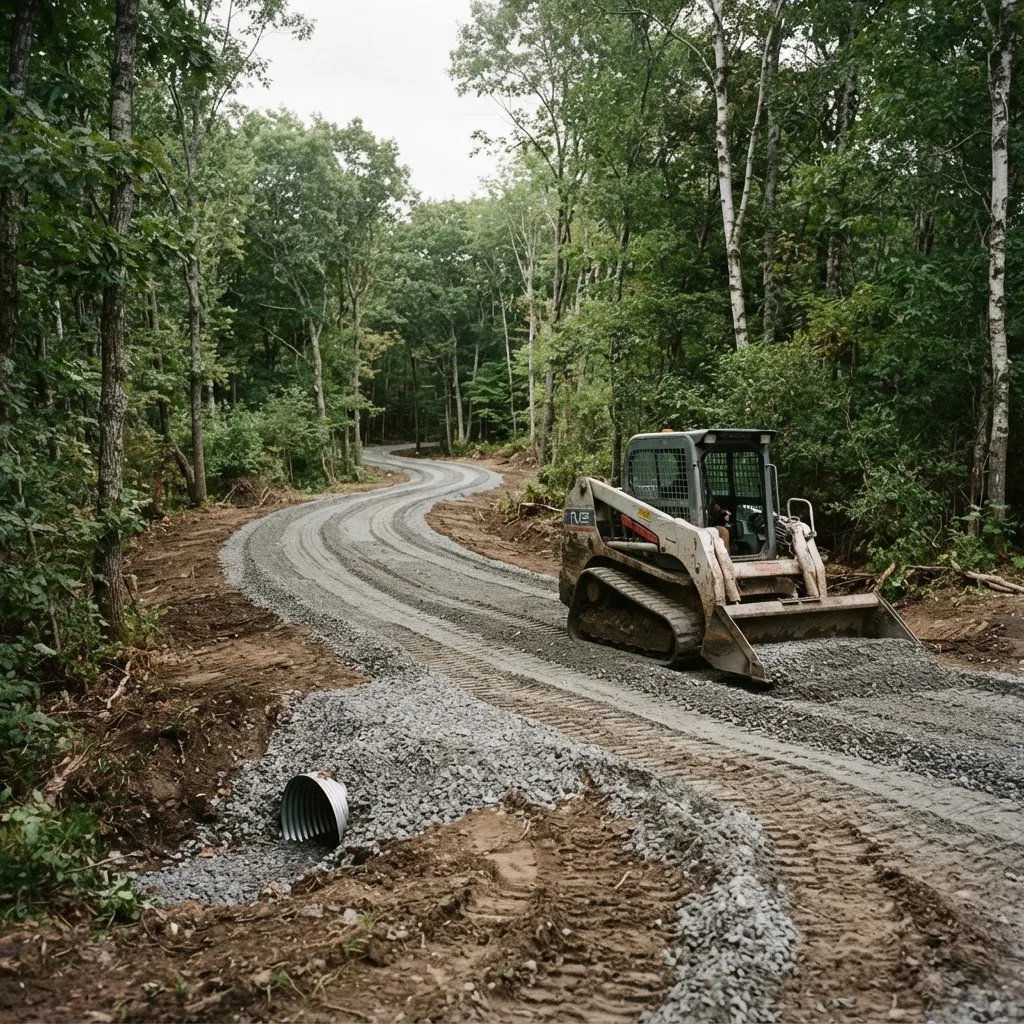
- It depends on the soil underneath and what the drive has to carry, which is why a single number is misleading. What matters more is the structure: stripped and compacted subgrade, a coarse compacted base course, then a finer surface course, with fabric added where the subgrade is soft. A thin skim of stone over unprepared ground will fail regardless of how good the stone is.
- Why does my gravel driveway keep getting potholes?
- Almost always water plus an inadequate base. If the drive has lost its crown, water runs along the surface instead of off it, concentrating in the wheel tracks and scouring out material. If the base is too thin or was never compacted, traffic pumps fine material up and stone down. Filling individual potholes is temporary; reshaping the crown, restoring drainage, and adding base where it is deficient is the actual fix.
- Do I need a permit for a new driveway?
- Usually yes for a new access point. A new curb cut onto a public road generally requires a permit from the town, or from MassDOT on a state highway. If the drive crosses or comes near a wetland or stream, a Conservation Commission filing is typically required as well. Some towns also have driveway grade and width standards for emergency vehicle access. Resurfacing an existing drive normally needs nothing.
- When is the best time of year to build or regrade a driveway?
- Late spring through fall, with fall often ideal so the base firms up before winter. Avoid mud season — frost leaving the ground makes the subgrade soft and unstable, and work done then tends not to hold. For routine regrading, a slightly damp surface compacts far better than bone-dry stone.